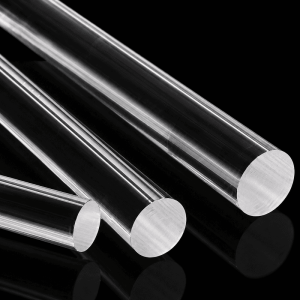

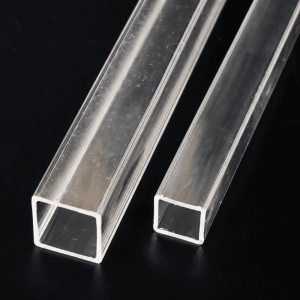
Polycarbonate Rod
What is Polycarbonate Rod?
Polycarbonates are considered to be special types of polyesters in which groups of dihyudric phenols are linked through carbonate groups. Perhaps one of the best known trade names in plastics is Lexan which is a polycarbonate. Polycarbonate, with its mechanical and engineering applications, will be reviewed here.
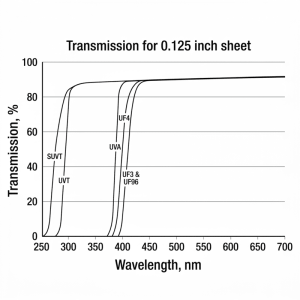
While more than a dozen performance characteristics of polycarbonate are utilized singly or in combinations, seven are most commonly relied on. These are high impact strength, water-clear transparency, good creep resistance, wide use temperature range, dimensional stability, abrasion resistance, hardness, and rigidity despite its ductility.
Polycarbonate’s properties are unique for a thermoplastic material. It is the toughest material that you can see through. Polycarbonate is many times stronger than acrylic, yet has the toughness and ductility associated with the softer and more rubbery materials. Polycarbonate has high resistance to deformation under load and at temperature extremes and its thermal expansion and contraction is significantly below that of acrylic or butryate.
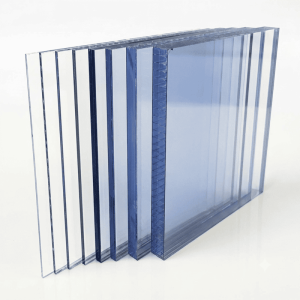
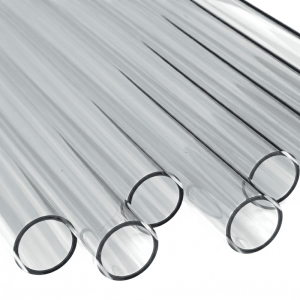
In addition to clear and colored sheet, polycarbonate is available in rod, tubing, extruded profiles, and film.
Polycarbonate Rod made from machine-grade polycarbonate resin is an amorphous thermoplastic material with high-impact strength, high modulus of elasticity, and good dimensional stability. These properties, in addition to good electrical characteristics, make machine grade polycarbonate stock shapes an excellent choice for electrical/electronic applications. Its strength, impact resistance and transparency also make it an ideal material for certain transparent structural applications.
Lexan® Polycarbonate, Unfilled, Machine Grade, Extruded
Lexan* polycarbonate is a mechanical grade of extruded polycarbonate that offers high strength, stiffness, and impact resistance with temperature resistance to 290°F. This material also has excellent electrical properties, making it a candidate for both the electronics industry and structural applications requiring transparency. A food grade polycarbonate is also available that is compliant with FDA, NSF, Canada AG, and USP Class VI regulations.
Properties, Applications, Availabilities, Tolerancesand Specifications for the Polycarbonate Rod
| Properties | Applications | Availabilities | Tolerances |
|---|---|---|---|
| Excellent impact strength | Signs | Standard Colors: Translucent, black, gray translucent sign colors | .250″ – 1.000″ + .002″ -.000″ |
| Transparent up to 2″ in special grades | Machine guards | 1.125″ – 2.000″t + .010″ -.000″ | |
| Good dimensional stability | Window glazing | Specification: LP-393 | 2.125″ – 2.750″ + .015″ -.000″ |
| Very good thermal stability | Insulators | 2.875″ – 4.750″ + .187″ -.000″ | |
| Exceptional machinability | Security glazing | 5.000″ over + .250″ -.000″ | |
| High dielectric strength | Guides | ||
| High volume resistivity | Shields | ||
| UL 94 V-2 @ .236″ thickness | Bushings | ||
| Optical lenses | |||
| Compact discs |
Specifications
| Compliance | English Values | Comments | Metric Values |
|---|---|---|---|
| Flammability, UL94 (5=V-0; 4=V-1; 3=V-2; 1=HB) | 1 (HB) | UL94 | 1 |
| FDA (1=Yes) | 0 | Not Compliant | 0 |
| USDA (1=Yes) | 0 | Not Compliant | 0 |
| NSF (1=Yes) | 0 | Not Compliant | 0 |
| 3A-Diary (1=Yes) | 0 | Not Compliant | 0 |
| Canada AG (1=Yes) | 0 | Not Compliant | 0 |
| USP Class VI (1=Yes) | 0 | Not Compliant | 0 |